
How SEO Became 80% of All Website Traffic
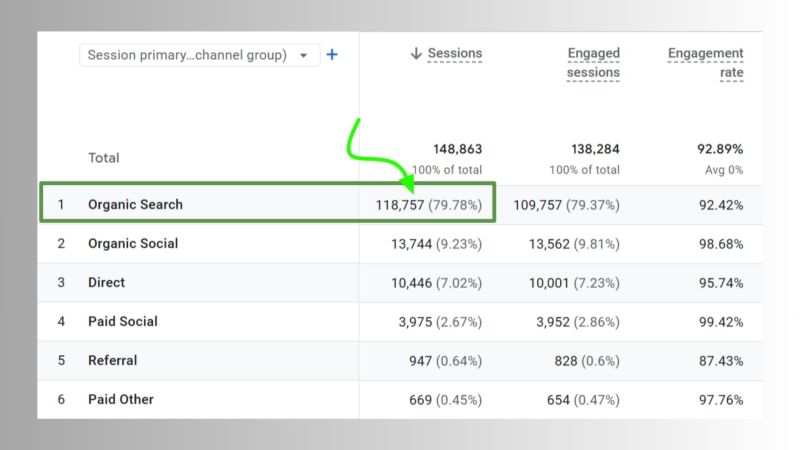
Most businesses spend 10–20% of their digital marketing budget on SEO. For this client, consistent organic work turned that “side channel” into the engine — 80% of all website traffic, landing on the pages built to convert, and turning into real leads.
79.8% of all traffic from organic search
92.4% engagement rate on SEO traffic
118,757 organic sessions in 90 days
- Duration: 90-day snapshot of an ongoing engagement
- Channel mix: Organic search #1 – larger than every other channel combined
The Situation
Every algorithm era brings a new reason to doubt SEO. AI Overviews, zero-click results, new platforms, new acronyms — and every year, businesses hold organic search at 10–20% of the budget while renting the rest of their traffic from ad platforms.
This client took the other path: treat SEO as a primary channel and fund it with consistency. Not consistency as a slogan — consistency as a operating rhythm. Technical health maintained, content shipped and refreshed on schedule, intent mapped and remapped as the market moved. Whatever terms arrive — whatever Google renames, whatever the industry panics about next — the fundamentals of being the best answer for your buyer’s searches don’t change. That’s the bet this engagement made.
What Consistency Actually Looked Like
No single tactic produced this channel mix. It was built the unglamorous way:
Sustained work, not campaigns. SEO done in bursts decays between the bursts. This programme ran continuously — technical monitoring, content production, refreshes, and internal linking as an ongoing system rather than a project with an end date.
Money pages at the centre. The strategy pointed organic growth at high-intent pages — the ones designed to convert — so the channel’s growth translated directly into leads instead of vanity sessions.
Ignoring the noise. Over any long engagement, trends come and go. The work stayed anchored to the same questions: what is the buyer searching, are we the best answer, and is the site technically flawless in serving it. New terminology arrives every quarter; the discipline doesn’t change.
Results
From the last 90 days of analytics:
- 118,757 sessions from organic search – 79.8% of all website traffic
- Organic search alone is nearly 9x larger than the next channel (organic social at 9.2%)
- All paid channels combined: barely 3% of traffic
- 92.4% engagement rate on organic sessions — of 118,757 visits, 109,757 actively engaged
- A majority of organic traffic landed directly on money pages — and is converting into real leads
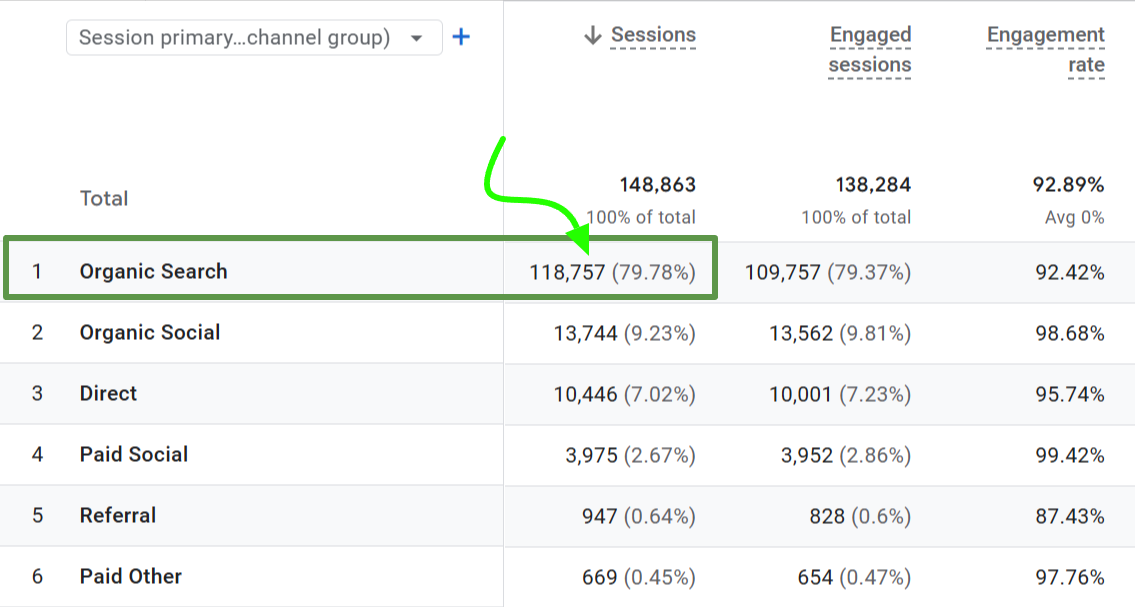
The engagement number is the quiet hero here. High-traffic, low-engagement SEO is a vanity metric. More than 9 in 10 organic visitors engaging means the channel is delivering the right people, not just people.
A Note on SEO vs. Paid
This isn’t an argument against paid ads. Paid offers speed, precise targeting, and campaign flexibility; SEO builds long-term trust, organic discoverability, and sustainable ROI. Both belong in a well-rounded strategy.
The real question is balance. If SEO drives 80% of your traffic and most of it converts, your budget should reflect that — not treat organic as an afterthought funded by what’s left over.
Key Takeaways
- Consistency is the strategy. SEO compounds only when the work continues through every algorithm cycle, trend, and rebrand of the same fundamentals.
- Point organic growth at money pages. Traffic that lands where conversion happens turns a channel into a pipeline.
- Judge SEO by engagement and leads, not sessions. 92% engagement means the right audience is arriving.
- Budget should follow results. When one channel drives 80% of traffic, it isn’t a cost line — it’s leverage. It works while you sleep. It compounds. It lasts.