
65% More Clicks in 3 Months – Without Publishing a Single New Page
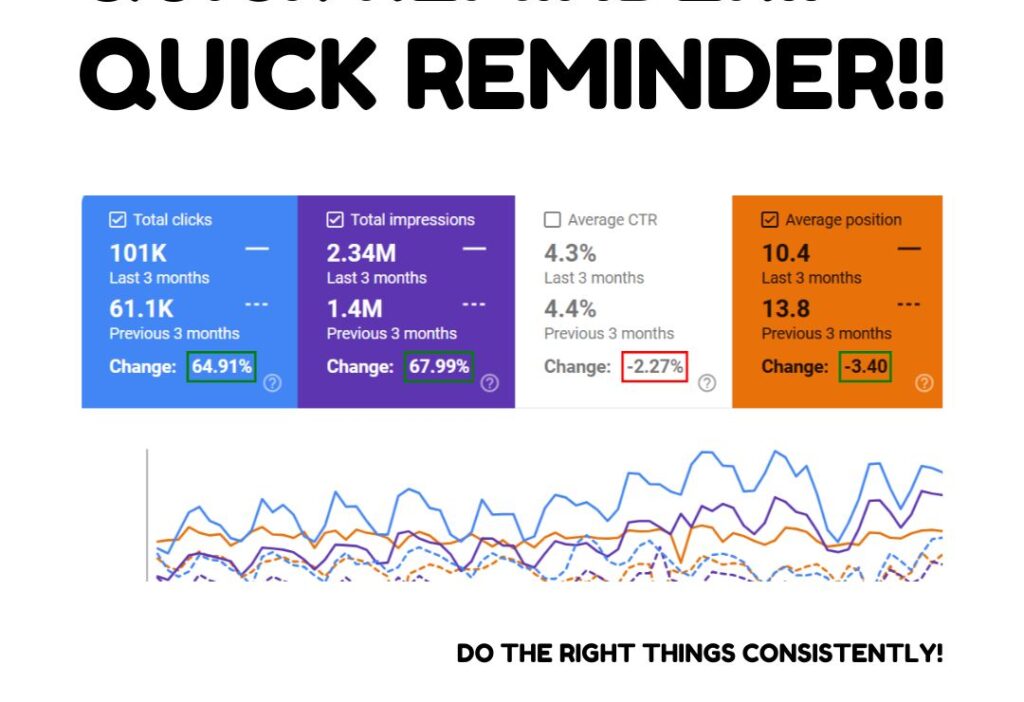
How a round of thoughtful content updates on older pages — driven by regular content decay analysis — grew organic clicks by 65% in three months. No new content. No hacks. Just the basics, done well.
+65% organic clicks in 3 months
+68% search impressions
3.4 positions improvement in average ranking
- Duration: 3 months
- Strategy: Content refresh – zero new pages published
The Situation
Every site accumulates content decay. Pages that once ranked well slowly slip: the information ages, search intent shifts, competitors publish fresher answers, and Google gradually favours content that better reflects what searchers want today.
Most teams don’t notice, because decay is quiet. Traffic doesn’t crash — it erodes, a few positions and a few clicks at a time, while everyone’s attention is on publishing new content and chasing the latest algorithm update.
We run content decay analysis at regular intervals precisely to catch this. This round of analysis surfaced a set of older pages that were ranking but underperforming – visible in search, slowly losing ground, and not earning the clicks their positions should deliver.
Our Approach
No new pages. The entire programme was rebuilding what already existed.
Decay Analysis First
Search Console data identified the pages worth the effort: content that still had impressions and rankings but showed a declining trend — proof Google still considered the pages relevant, just no longer the best answer. Fixing an existing page that Google already trusts is faster than earning trust for a new one.
Refreshing Against Current Search Intent
Each page was reworked against what the query means now, not what it meant when the page was written. Outdated information was replaced, sections were restructured to answer today’s version of the question, and readability was improved throughout. This is exactly what Google’s guidance on helpful, people-first content rewards: the freshness that matters isn’t a new publish date — it’s content that genuinely serves the current searcher. Google’s systems are built to detect the difference between a cosmetic date change and a substantive update.
E-E-A-T Woven Into the Rewrite
Updating content is also the natural moment to strengthen Experience, Expertise, Authoritativeness, and Trust signals — accurate current facts, clearer sourcing, and content that demonstrates first-hand understanding of the subject. Decayed pages often fail quietly on trust: information that was right two years ago reads as careless today. The refresh corrected that across every page in scope.
Results
Three months compared against the previous three (Google Search Console):
- 101K clicks, up from 61.1K (+65%)
- 2.34M impressions, up from 1.4M (+68%)
- Average position improved from 13.8 to 10.4 – from page two into striking distance of the top results
- CTR dipped slightly (4.4% → 4.3%) – the expected side-effect of impressions growing 68%: the pages entered many new queries where they hadn’t yet earned their click share
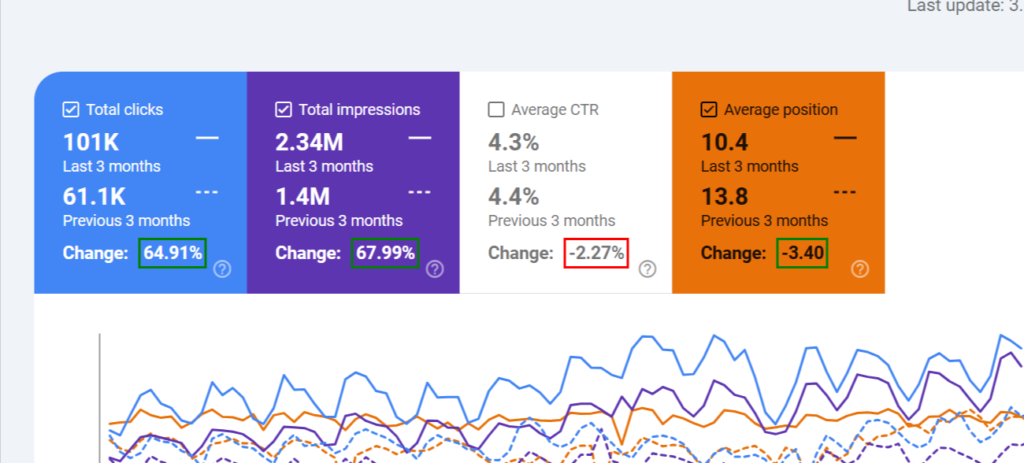
That last point matters, and we’d rather explain it than hide it. When visibility expands this fast, CTR almost always dips before it climbs — the site is being shown to new audiences it hasn’t converted yet. Position and impressions lead; CTR follows.
Key Takeaways
- Updating old content still — and always — works. Google rewards substantive refreshes that realign pages with current search intent.
- Decay analysis should be a scheduled habit, not a rescue mission. Quiet erosion costs more traffic than any algorithm update.
- A page Google already ranks is your fastest growth asset. Improving it beats starting from zero with something new.
- Good SEO isn’t about doing everything. It’s about doing the right things, consistently.