
78% More Revenue From Search in 6 Months – For a UK Challenger Brand Competing Against Giants
How a small UK e-commerce brand grew search revenue by 78% in six months – not by outspending the industry giants, but by out-researching them.
+78% revenue from organic search ,
+50% total organic clicks ,
+93% growth in non-branded traffic
- Duration: 6 months
- Market: United Kingdom
- Industry: E-commerce
About the Client
A small UK e-commerce brand competing in a category dominated by industry giants – the kind of market where the biggest players outspend everyone on ads and own the branded search results.
That was exactly the opportunity. Giants defend their brand names and their biggest keywords. The open ground is everything in between: the specific, lower-competition searches shoppers make before they’ve decided who to buy from.
The Problem
When a challenger brand relies on branded search, it only reaches people who already know it exists. Growth means winning searches where nobody has decided yet – and the head terms in this category were locked up by brands with far bigger budgets and older domains.
Competing head-on wasn’t an option. Competing smarter was.
Our Approach
No shortcuts, no tricks – six months of consistent SEO built on one thing: a deeper understanding of what this audience searches for than the giants bothered to have.
1. Research First, Everything Second
Before touching the site, we studied how UK shoppers in this category actually search – the queries, the phrasing, the intent behind them. Search Console data, competitor gap analysis, and query-level research shaped every decision that followed. Strategy came from data, not assumptions.
2. Category and Sub-Category Expansion
The research showed the store’s structure was too broad for how people search. Shoppers don’t look for a general category – they look for the specific type, style, or use case. So we expanded the site’s architecture: new sub-category pages built around real query clusters, each targeting a distinct group of searches the site had never had a page for. Every new page gave Google a precise answer to a precise search.
4. Micro-Niche Targeting
Instead of fighting giants for head terms, we went where they weren’t: micro-niches within the category – specific product types and long-tail, decision-stage queries with clear buying intent and thin competition. Individually small, collectively significant. A challenger can’t outrank a giant on the biggest keyword, but it can win a hundred searches the giant never optimised for.
5. Consistency Over Campaigns
No bursts, no hacks. Steady technical, on-page, and content work compounding week over week across the full six months.
Results
Comparing July–December 2024 against January–June 2024 (Google Search Console + store analytics):
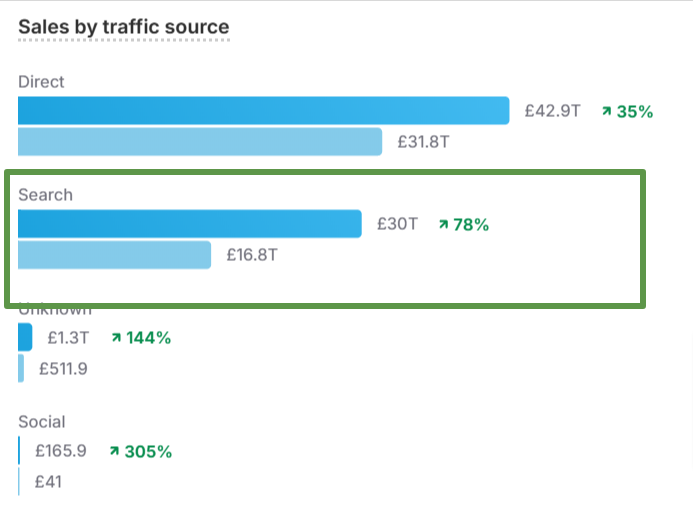
- £30K revenue from search, up from £16.8K (+78%)
- 10K total organic clicks, up from 6.67K (+50%)
- Non-branded clicks nearly doubled: 4.79K, up from 2.48K (+93%)
- Non-branded impressions: 1.33M, up from 858K (+55%)
- Direct revenue rose 35% alongside – shoppers discovering the brand through search, then returning by name
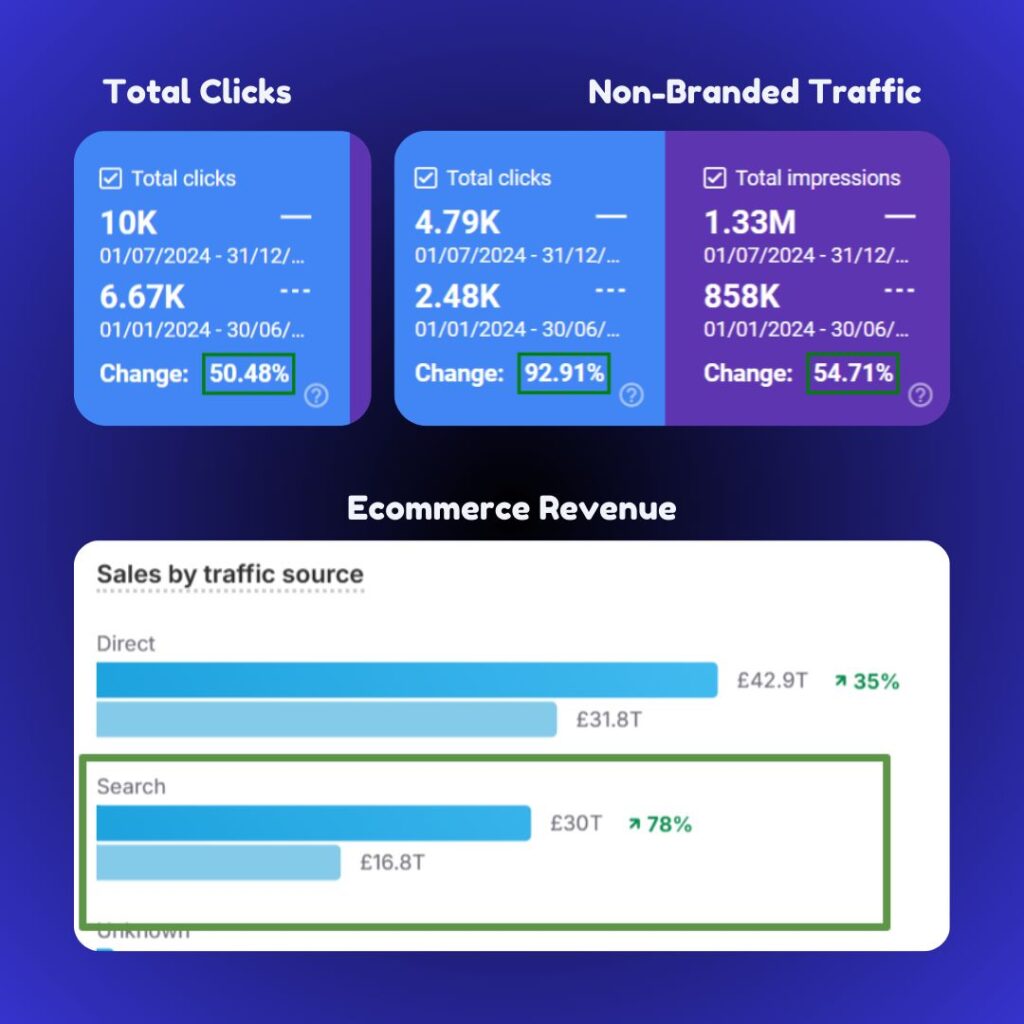
The revenue grew faster than the traffic – 78% against 50% – because the new sub-category and micro-niche pages brought in visitors who were closer to buying, not just browsing.
Key Takeaways
- You don’t need to be the biggest brand to win in search — you need the right approach. Giants own head terms; challengers win the specific searches in between.
- Site architecture is strategy. Sub-category pages mapped to real query clusters gave every search a page built to answer it.
- Micro-niches compound. A hundred small wins the competition ignored added up to a 78% revenue jump.
- Revenue growing faster than traffic is the sign of intent-matched SEO – the right visitors, not just more of them.